
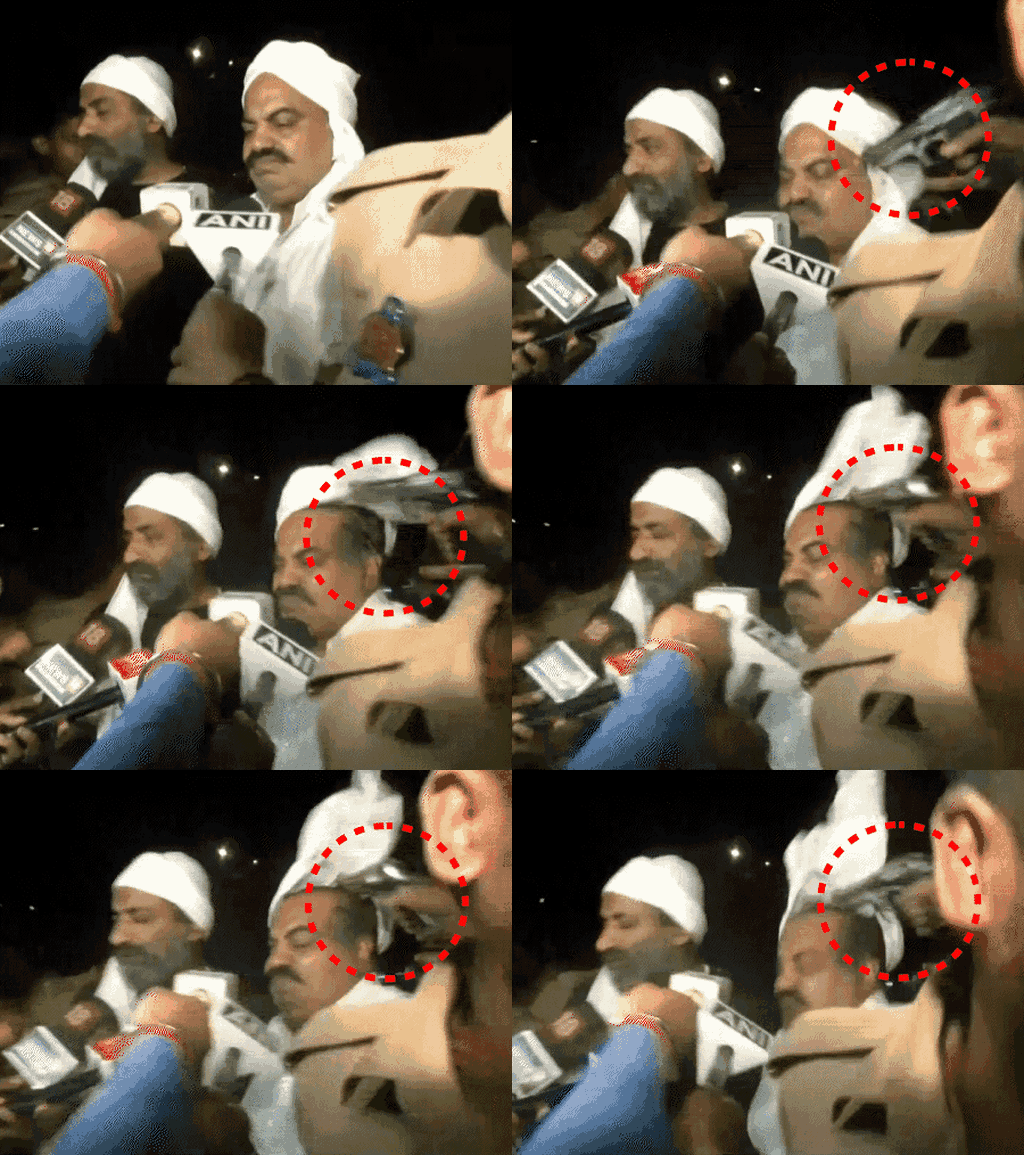
Atiq Ahmed, a former legislator, exemplified the demise of Uttar Pradesh’s legal system in life and death. The visuals of both him and his sibling Khalid Azim being shot dead without a second thought, on Saturday, while they were bound and in police care, show the miserable rebellion that wins in the State. Ahmed had written to the Supreme Court of India at the beginning of March to express his concern that he might be “killed in a fake encounter on one pretext or the other by the U.P. Police.” The Court wouldn’t engage his supplication. On Thursday in Jhansi, an alleged altercation with a U.P. police team resulted in the death of his son, Asad Ahmad. In the sensational daylight murder of a political rival in February, a father and son were both accused. Ahmed, the previous head of the Samajwadi Party and Apna Dal opened his set of experiences sheet at 17 years old and had in excess of 100 lawbreaker cases at the hour of his homicide at 60 years old. He ruled supreme as a don-turned-politician through various U.P. regimes since the 1990s, defying the law. His criminal empire did not fall apart when he was sentenced to time in prison. In 2019, he was moved to a prison in Gujarat, and when he came back to Uttar Pradesh, he was facing new murder charges, which led to his own brutal murder.
In the past six years, 183 alleged criminals have been shot and killed in encounters, according to the U.P. police. Since March 2017, more than 10,900 encounters with police have occurred. Any rule of law is based on the principle of due process, and when it is violated, chaos ensues. The dubious and discriminatory application of the law and procedures has stretched the legitimate power of the U.P. police and administration. It is now common practice to demolish the homes of people suspected of committing crimes or participating in political protests. This trend is lawlessness and a social pathology because it appears to be common among supporters of the ruling Bharatiya Janata Party and Chief Minister Yogi Adityanath. A number of political parties have sought to hold the U.P. police responsible for the double homicide. A three-member commission led by a former High Court judge has been announced by the state to investigate the errors. An independent investigation is required in light of the serious allegations against the State government and its police of religious and caste discrimination and lack of respect for due process.